Things
Properties
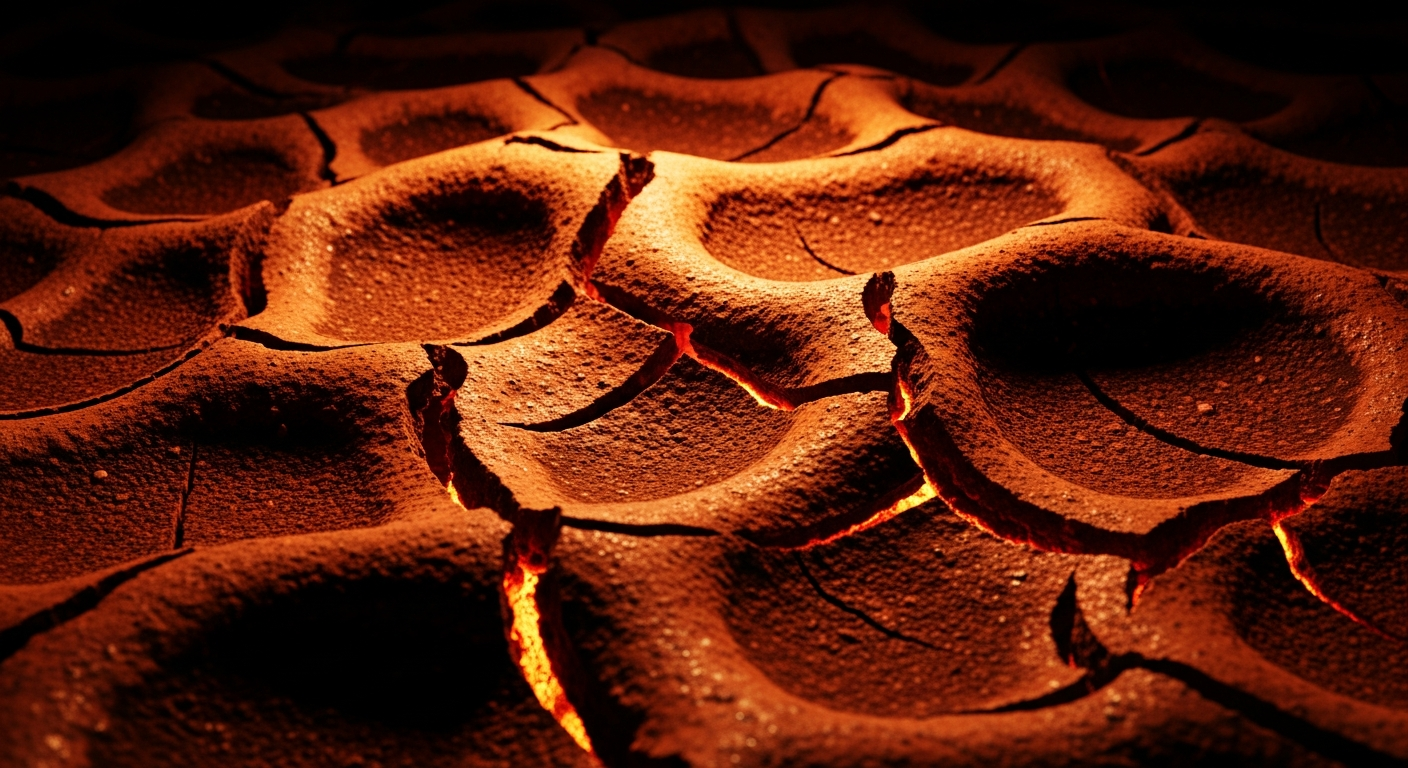
Baked soil and oxidized stone offer strict granular resistance to the body. They lack moisture but provide immense friction. When light bounces off desert sand and hits the retina, the visual cortex retrieves the somatic memory of ground that reliably supports weight. Vision becomes touch remembered at a distance. The physical abrasion of the terrain constitutes the entire optical sensation.
Autumn leaves and rust signal ephemeral decay. Sandstone cliffs and deep clay beds signal geological stability. The neural architecture must compress these opposing realities into one unified feeling. The resulting sensation is enduring entropy. We experience the visual echo of death and degradation as something safe and foundational.
Early humans spent millennia seeing this spectrum on bruised flesh and clay-painted bodies illuminated by firelight. The dry dirt of the cave floor merges with the living bodies resting upon it. The neural record demands a fusion of terrestrial friction and tribal proximity. The final optical feeling is not sterile dust. It is the exact sensation of a warm body lying on baked earth.
Ask the lab a question about ochre.
Open in Lab →